

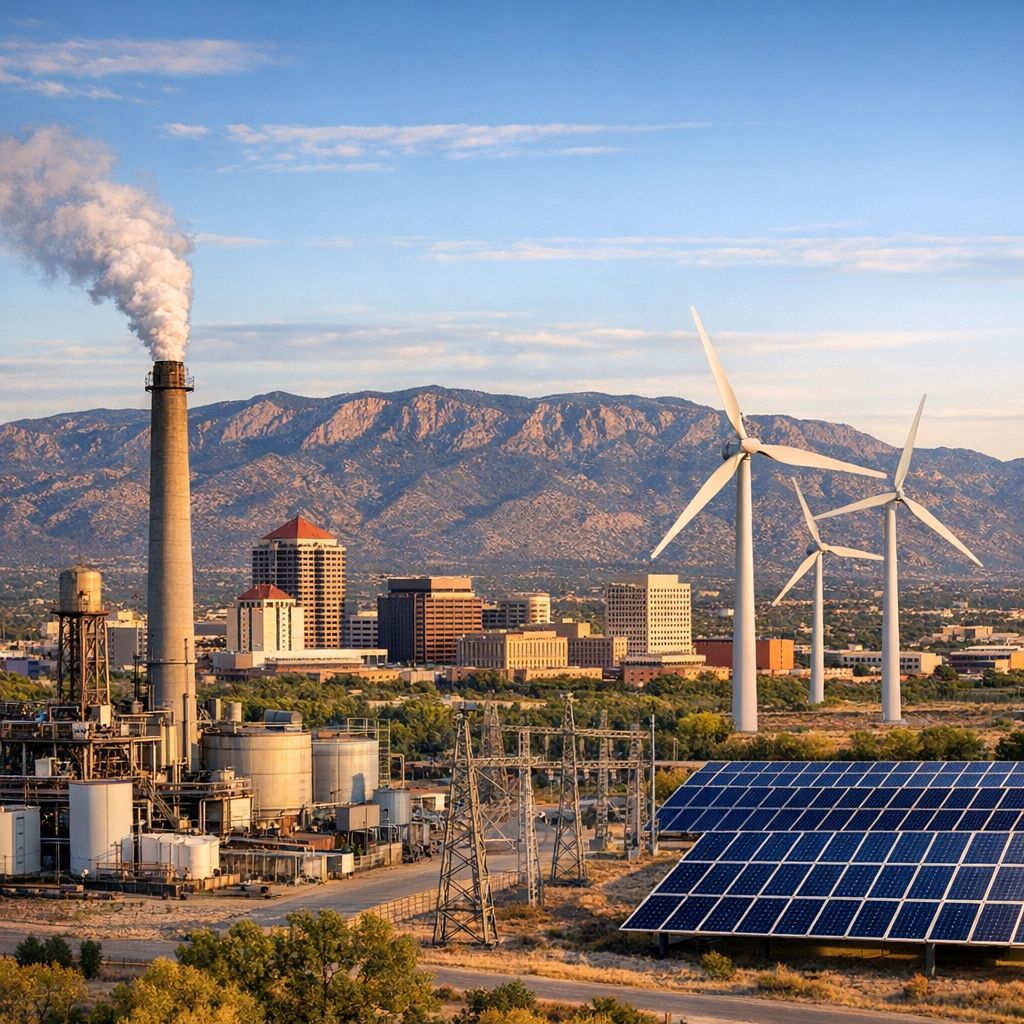
Albuquerque, as New Mexico’s principal economic center, is deeply intertwined with national economic policies. These federal decisions significantly influence our local economy, shaping sectors from manufacturing to renewable energy.
Federal Incentives and Local Manufacturing
National initiatives promoting advanced manufacturing have spurred growth in Albuquerque. The city’s manufacturing sector has seen substantial expansion, particularly in semiconductor manufacturing, which has experienced a 50% job growth from 2018 to 2023. This surge is partly due to federal support for technological innovation and infrastructure development. Albuquerque’s manufacturing industry is now four times more concentrated in semiconductor manufacturing than the national average, highlighting the city’s strategic importance in this sector. Source
Renewable Energy Policies Fueling Local Development
Federal policies advocating for renewable energy have positioned Albuquerque as a leader in this field. The city boasts substantial resources in solar, wind, hydroelectric, biomass, and geothermal energy. With over 33,550 individuals employed in renewable energy cluster industries, Albuquerque contributes significantly to the state’s GDP, with a $3.8 billion contribution in 2021. The city’s low utility costs and favorable climate further attract renewable energy investments. Source
Defense Spending and Economic Impact
National defense budgets directly affect Albuquerque through installations like Kirtland Air Force Base. In 2024, Kirtland contributed $7.5 billion to the local economy, accounting for 12% of the area’s total economic activity. The base employs 5% of Albuquerque’s workforce, with a payroll of $2.6 billion, underscoring the significant role of federal defense spending in our local economy. Source
Federal Research Funding and Technological Advancements
Federal investments in research and development have bolstered Albuquerque’s technological landscape. The Sandia Science & Technology Park, established in 1998, has paid nearly $7.2 billion in wages and generated over $4 billion in taxable personal consumption. This highlights the park’s role in driving economic growth and innovation in the region. Source
In conclusion, Albuquerque’s economic vitality is closely linked to national economic policies. Federal initiatives in manufacturing, renewable energy, defense, and research funding have collectively shaped the city’s growth trajectory, reinforcing its position as a dynamic economic hub in the Southwest.