

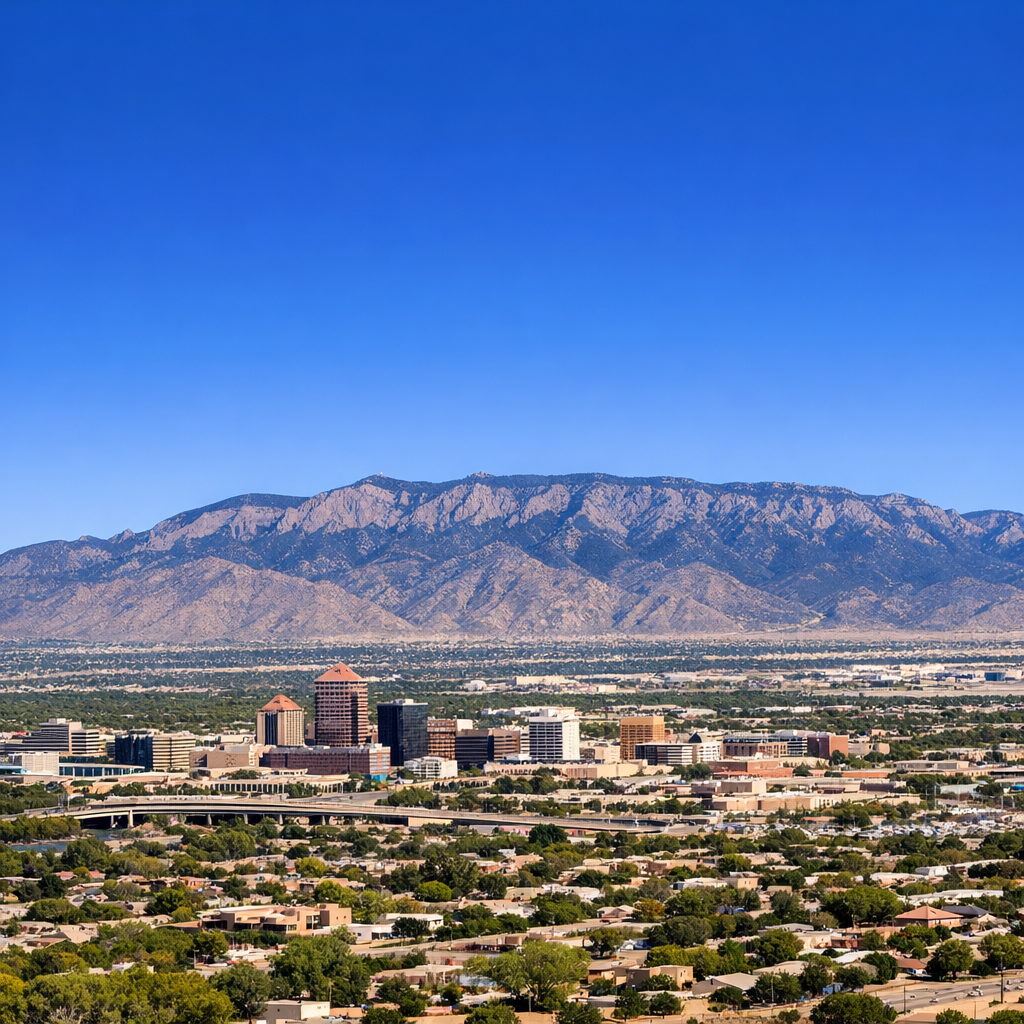
Albuquerque, nestled in the high desert of New Mexico, boasts a climate that combines abundant sunshine, low humidity, and distinct seasonal variations. This unique blend offers residents and visitors a comfortable and diverse weather experience throughout the year.
Spring: Mild and Pleasant
Spring in Albuquerque, spanning March to May, brings mild temperatures and blooming flora. Average high temperatures range from 60°F (16°C) in March to 75°F (24°C) in May, with lows between 38°F (3°C) and 50°F (10°C). Rainfall is minimal, averaging around 0.5 inches (13 mm) per month. The city’s elevation of approximately 5,300 feet contributes to significant temperature fluctuations between day and night, so layering clothing is advisable. Source
Summer: Warm and Dry
Summers, from June to August, are characterized by warm temperatures and low humidity. Average highs hover around 90°F (32°C), with lows in the mid-60s°F (18°C). Despite the heat, the arid climate ensures that the warmth is generally comfortable. The monsoon season typically occurs in July and August, bringing brief but intense afternoon thunderstorms that provide much-needed moisture and spectacular sunsets. Source
Autumn: Crisp and Colorful
Autumn, from September to November, offers crisp air and vibrant foliage. High temperatures decrease from 78°F (26°C) in September to 55°F (13°C) in November, while lows range from 58°F (14°C) to 35°F (2°C). This season is ideal for outdoor activities, with comfortable temperatures and clear skies. Source
Winter: Cool and Sunny
Winters, spanning December to February, are cool but generally mild compared to other regions. Average highs are around 50°F (10°C), with lows near 27°F (-3°C). Snowfall is infrequent and usually light, with the city receiving an average of 2.4 inches (6 cm) in December. The surrounding Sandia Mountains, however, often experience more substantial snowfall, providing opportunities for winter sports enthusiasts. Source
Environmental Considerations
Albuquerque’s climate also influences local environmental factors. The low humidity and high altitude result in increased UV radiation, making sun protection essential year-round. Additionally, the arid conditions contribute to occasional air quality concerns, particularly during periods of high wind or wildfire activity. The City of Albuquerque’s Air Quality Program monitors and reports on these conditions to help residents stay informed. Source
Understanding Albuquerque’s climate is key to appreciating the city’s natural beauty and planning activities accordingly. Whether you’re a long-time resident or a visitor, being aware of seasonal patterns enhances the experience of this vibrant Southwestern city.